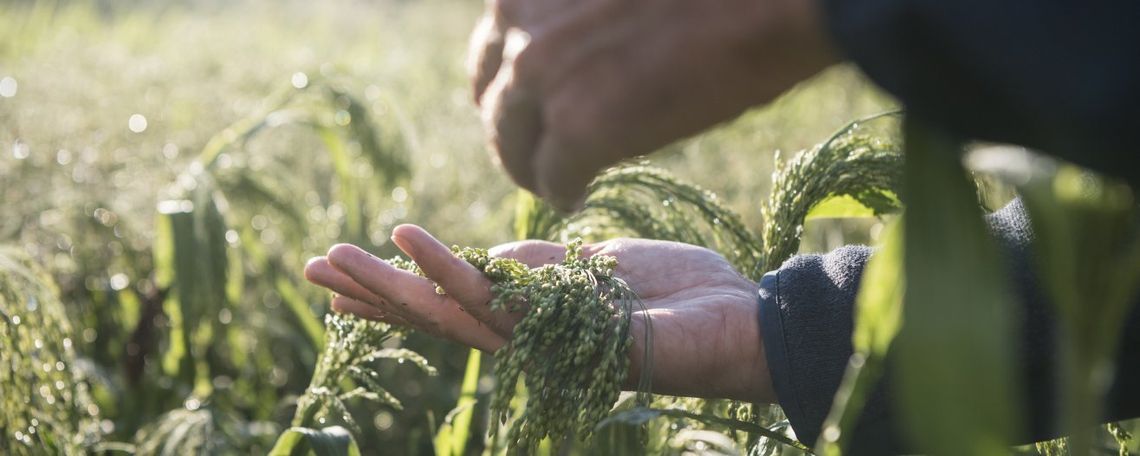
Millet is a resilient, adaptable and naturally gluten-free cereal. It has a high fibre, calcium and iron content along with a growth short growth cycle. It is tolerant to climatic stresses (heat and drought), pests and diseases. These characteristics make it a nutritious, sustainable food source but also an opportunity to meet diverse dietary needs and support economic growth.
The VItaMì project started in 2020, with the first implementation of crosses between selected millet varieties, and continued over the following years with the greenhouse cultivation of around 6.000 millet lines from four different crosses and the selection of 1.000 plants to be brought into the field. In 2022, the first field trials and the initial selection and evaluation of the best lines began. A thorough and meticulous analysis process that will continue over the next few years with the aim of distributing the first seed to farmers, our trusted partners, in 2025, and including the seed in the supply chain in 2026.
VItaMì is just the latest of our projects in support of biodiversity. Actually, in 2016, our Dr. Schär R&D Centre promoted Re-Cereal, designed to recover and promote minor cereals. Over the years we have also engaged in several variety trials involving gluten-free minor crops such as sorghum and buckwheat. In Poland, we are working to increase the presence of bees in the fields and stem the decline of pollinators. Finally, in partnership with Laimburg Research Center and with seed banks such as CropTrust and Genebank Tyrol, we have created Field100, one of the most biodiverse fields ever cultivated.